Poverty Line Problems of the Impoverished (Part 2 by Gospel for Asia)
Wills Point, Texas – Gospel for Asia (GFA) Special Report Part 2 – Discussing the impact of educational development on the eradication of extreme poverty.
Education’s Holistic Impact on Family Life, Income
God’s creation of the human mind is a marvelous thing. It has the capacity to imagine, dream, create, cherish, remember, deduce, learn and use logic.
When given opportunities through education to learn, cultivate skills and dream, we are capable of accomplishing extraordinary things. To name a few, these include sending human beings into space, discovering medical breakthroughs, crafting new written languages and rebuilding crumbled economies.
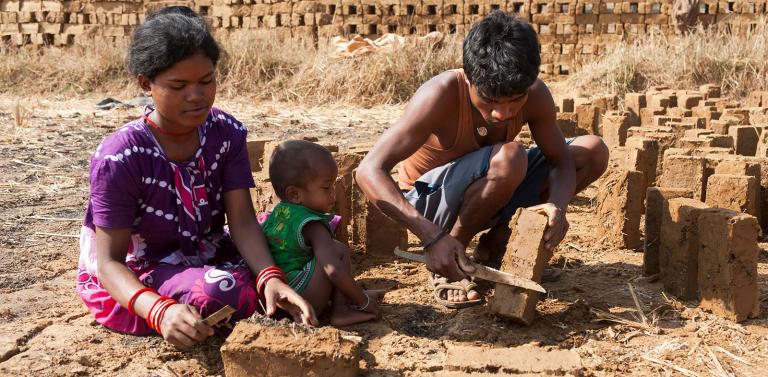 |
| This woman works alongside her husband to make bricks, bringing her infant with her. Both men and women work hard in rural villages to try to make ends meet. |
We’ve glimpsed snapshots of what happens when mankind lacks the necessary opportunities to cultivate the amazing mind God has granted him.
Underdeveloped minds and absent opportunities steal much of the influence people could make if they only had a chance.
What does it look like when people with little or no opportunity to receive an education are at last given that chance?
An article posted by Schools & Health states,
“Education is fundamental to sustainable development, it is a powerful driver of development and one of the strongest instruments for reducing poverty and improving health; it enables people to be more productive, to earn a better living and enjoy a better quality of life, while also contributing to a country’s overall economic growth.”[1]
The impact of education on children, families and entire communities affected by poverty is vast and multi-faceted. Let’s consider just a few of the most prominent outcomes of education.
Education’s Impact on Income
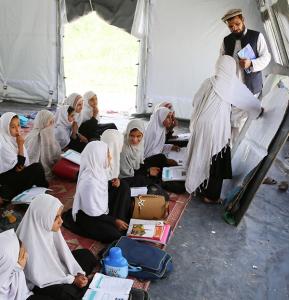
Knowledge of a skill empowers breadwinners to find jobs with better pay and better hours. A literate person in Pakistan earns 23 percent more than an illiterate worker. And in the female workforce, a woman with high literacy skills can earn 95 percent more than an illiterate woman or one who has low literacy skills.[3]
In rural Indonesia, those who finish lower secondary education are twice as likely to escape poverty. In addition, their chances of descending into poverty are reduced by a quarter.[4]
In one study done by an EFA Global Monitoring Report team, findings revealed,
“If all students in low income countries left school with basic reading skills, 171 million people could be lifted out of poverty, which would be equivalent to a 12% cut in world poverty.”[5]
Increased education doesn’t only open new job opportunities for breadwinners; it also enables workers to succeed in their inherited family businesses. Farmers who receive an education are more likely to implement the use of fertilizers and be better equipped to understand the needs of their crops and soil.
Equipped with mathematical skills, a parent can wisely make choices on purchases, contracts and family budgets. And in any business, an increased understanding of finances and mathematics helps guard business owners against being taken advantage of.
If a mother can read, her child is 50 percent more likely to live past the age of 5.
Click here, to read more about this article.
Click here, to read more blogs on Patheos from Gospel for Asia.


Comments
Post a Comment