For Victims of Slavery and Child Trafficking There is Hope
Proverbs 22:6 tells us to “train up a child in the way he should go, and when he is old, he will not depart from it.” This message is a sincere promise that guides the hands and hearts of parents around the world. Children are a blessing and an enormous responsibility. They are also little sponges that quickly soak up knowledge and experience to apply in their lives.
A child will not forget their upbringing; God promised it. But when children—the most innocent people on Earth—are abused, neglected or pulled into a life of slavery, that “training” also stays with them for life and will shape the person they will become.
Human trafficking is not just someone else’s problem; it’s everyone’s problem. It takes place in developing countries and in cities and small towns in the Western world every day. There are numerous reasons given, but they primarily distill one thing: Profits for their owners.
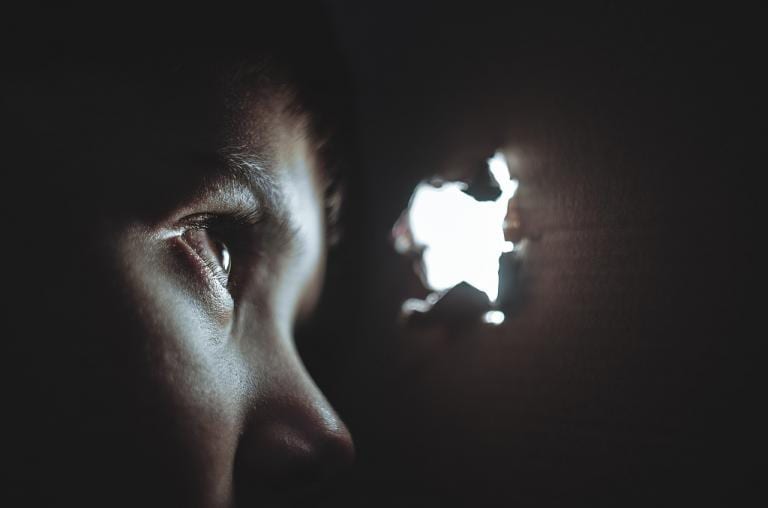
Make no mistake, human trafficking is a slightly more palatable term pasted over an age-old, ugly word: slavery. Some children are stolen away from their parents. Some are taken from the streets. And some are given away or sold by the very people who should care for them most.
The life of a child enduring slavery bears no resemblance to a child safe in the loving care of their parents or guardians. It’s filled with physical abuse, psychological abuse, sexual abuse, hunger, disease and forced labor. But in all of this darkness, there is light.
Gospel for Asia supports many selfless workers who care for and help protect children rescued from a life of slavery and abuse. Every child who enters the safety of a loving, caring environment has an opportunity to dilute the effects of the past and build a future of hope.
Slavery Isn’t a Problem Relegated to History
In America, the word “slavery” brings to mind a horrifying low point in history with no redeeming qualities. The mere idea of “selling” and “owning” another human being is beyond comprehension for most of us today.
But slavery is not a historical problem.
Right now—today—many children around the world live the realities of slavery without any hope for rescue.
The United Nations calls human trafficking a “global, multi-billion-dollar enterprise, affecting nearly every country in the world.” In that quote lies the reason why, in the 21st Century, children are still at risk. There is money to be made in human trafficking, and the amount of money is non-trivial.
“Children are, by definition, vulnerable. They rely on the adults around them to care for and protect them. Who will intervene when those adults not only let them down, but plot against them for personal gain?”
Men, women and children are all affected by human trafficking. With men, the result is usually forced labor, physical abuse and virtual imprisonment. Seeking work, men—many of them refugees—may enter a situation believed to be employment but in reality is slavery. The brutality inflicted on men in forced labor is almost beyond imagination.
According to a report by Human Rights Watch, migrant workers held captive in the Thai fishing industry face excessive work hours, forced amphetamine use, little or no safety protections, no rights, little pay, severe abuse and even torture or death for workers who complain or try to escape. Bodies found floating in waters go unidentified, and the deaths are rarely investigated by authorities.
Women and children, however, make up a greater portion of those living in slavery. The United Nations Office on Drugs and Crime explains that more than 70 percent of victims are women and children.
Children may be sold or given by parents or guardians into slavery, either as payment for a debt or in the hopes of a better life for the child. A widow with no property, no rights, no source of income and several children to feed may send a child to live with a relative. But the same child may then live a life of abuse and neglect.
Certain predatory orphanages are also emerging as a shocking perpetrator. In Nepal, for example, a veritable fortune has been given to aid orphaned children who, in reality, are only orphaned on paper. And while these orphanages are charged with caring for children, real life is not the same.
Meals and care are withheld from these paper-orphaned children. Many are at risk of sexual abuse by the very people who operate the profit-seeking orphanages. A hungry, sickly, abused and frightened child garner more sympathy and more donations for the orphanage’s coffers.
Children are, by definition, vulnerable. They rely on the adults around them to care for and protect them. Who will intervene when those adults not only let them down, but plot against them for personal gain?
Click here, to read more about this article.
Click here, to read more blogs on Patheos from Gospel for Asia.


Comments
Post a Comment