Dying of Thirst: The Global Water Crisis (#2 by Gospel for Asia)
WILLS POINT, TX – Gospel for Asia (GFA) Special Report Part 2– Discussing the global water crisis and the quest for access to clean water.
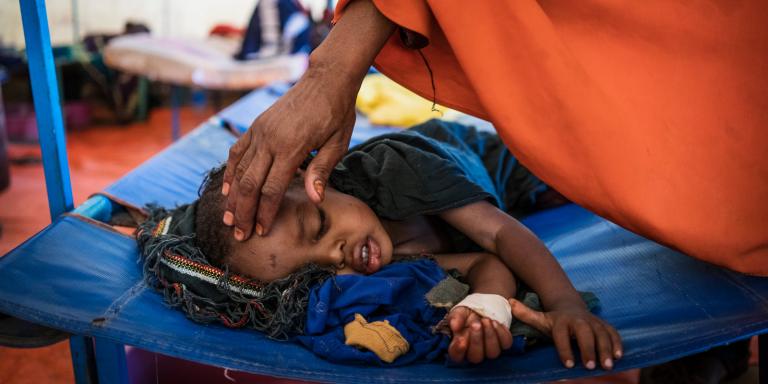 |
| A mother cares for her son who is being treated for cholera at a UNICEF-supported cholera treatment center in Baidoa, Somalia Photo by Mackenzie Knowles-Coursin, UNICEF |
Waterborne Diseases Caused by the Global Water Crisis
Even under normal conditions, people in many regions are exposed to life-threatening diseases from their water, including typhoid, polio and hepatitis A. Among the most common waterborne diseases is diarrhea, which can be caused by any of several pathogens. It kills about 1.5 million children every year, more than 80 percent of them in Africa and South Asia. World Health Organization (WHO) estimates that 88 percent of those deaths are caused by unsafe water, inadequate sanitation and poor hygiene.[1] Diarrheal diseases kill by depleting the body’s fluids, often very rapidly.
Children are most vulnerable because their metabolisms use more water than adults’, and their body weight consists of more water proportionally than an adult’s. Their kidneys are also less able to conserve water.[2]
"Diseases that are so deadly can be prevented with changes that are simple."
Children with malnutrition and weakened immune systems are especially susceptible to the worst effects of diarrhea. This explains why diarrheal disease is one of the primary killers in poorer countries but not in the developed world. Some diarrheal diseases target adults and older children. One of the most familiar and deadly of these is cholera, which afflicts between 1.4 million and 4 million people each year, killing thousands.[3]
In some documented cases, improving the quality of water at the source, combined with treatment of household water and safe water-storage systems, has reduced the incidence of diarrhea by 47 percent. And studies show that simply handwashing with soap can reduce the incidence by 40 percent.[4] These figures underscore a tragic truth: Diseases that are so deadly can be prevented with changes that are simple.

Trace Element Contamination Adds to Global Water Crisis
Sometimes it isn’t living organisms that make people sick, but it’s the naturally occurring elements in the water. Heavy metals and other trace elements are usually present in our diets, and in fact, many of them are essential—but only in tiny quantities. When we ingest more than the safe levels, we can experience illness and even death.
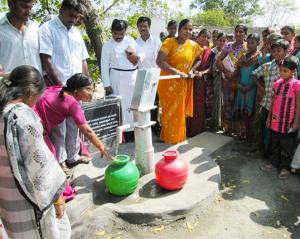
This was the problem facing four Asian villages when Gospel for Asia (GFA)-supported workers came to the scene in 2014. This area typically experienced several months of drought, followed by heavy monsoon rains. But the water left by the rains was contaminated with chemicals. Villagers with enough money could buy their own water, but the poor had to walk long distances every day to ask for water from local landlords. Gospel for Asia (GFA)-supported pastors in the area arranged for wells to be installed in all four villages, bringing clean water at last to approximately 5,300 people.
One of the most well-known water contaminants is lead. Lead poisoning can cause headaches, abdominal pain, mood disorders, high blood pressure, joint and muscle pain, and difficulty with memory or concentration. As always, children experience the worst effects. Lead poisoning can delay their development and cause learning difficulties. They may also experience fatigue, vomiting, hearing loss and seizures.
"Water is a fragile resource, and its problems are not limited to the developing world."
Since lead paint was identified as a major problem in the United States during the 1970s, a concerted national campaign reduced its impact over time. But Americans received a wake-up call in 2014 when the water supply in Flint, Michigan, came under scrutiny—as described by Karen Burton Mains in GFA’s special report “The Global Water Crisis: Finding Solutions to Humanity’s Need for Pure, Safe Water.”[5]
Residents complained about the color, taste and smell of their water. It turned out that the service lines from water mains to individual homes in Flint were made of lead and were not treated with corrosion inhibitors, which keep the contamination at acceptable levels. Eighty-seven cases of Legionnaire’s disease were associated with the contaminated water, leading to 12 deaths. Overall, more than 100,000 people had been exposed to a dangerous poison.
The Flint saga reminded everyone that water is a fragile resource, and its problems are not limited to the developing world.

Arsenic is well known as a poison, but it’s actually an element that occurs naturally throughout the world. When it enters a water supply, however, it can cause unimaginable suffering.
In 1983, scientists discovered arsenic in the water of 33 villages in West Bengal, India. Subsequent investigations revealed similar contamination in 2,417 villages along the flood plains of the Ganges River.[7]
Arsenic poisoning can cause severe abdominal pain, nausea, vomiting and diarrhea. Other symptoms include abnormal heart rhythm, muscle cramps and tingling extremities. Some victims first notice unusual lesions and growths on their skin, and many then discover they have cancer. Victims of arsenic poisoning can recover if the source of their illness is removed in time.
Several other disease-causing trace elements—most of them heavy metals—contaminate water supplies today. Cadmium accumulates in the kidneys and hepatic system and can cause cancer. Chromium, likewise, can cause liver and skin cancer when it reaches high levels. Zinc and copper can also be dangerous to health.
Click here, to read more about this article.
Click here, to read more blogs on Patheos from Gospel for Asia.


Comments
Post a Comment