Dying of Thirst: The Global Pure Water Crisis (#3 by Gospel for Asia)
WILLS POINT, TX – Gospel for Asia (GFA) Special Report #1 – Discussing the world’s quest for access to pure water that is safe to drink.
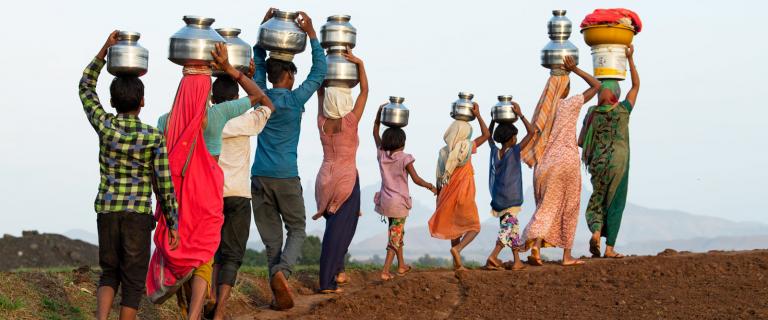
India: Success and Challenge
In recent decades, India has emerged as a global economic powerhouse. It is now the seventh-largest economy in the world by nominal gross domestic product (GDP)[27] and at least the fourth largest in purchasing power parity.[1] Much of this success stems from the technology field, India’s fastest-growing sector. Information technology, process outsourcing and software services are among the country’s booming industries.
But success is accompanied by great challenges. India is home to about 1.34 billion people and is still growing. Its population, now the world’s second largest,[2] is projected to overtake China’s as early as 2024.[3] This has placed unprecedented stress on the country’s water resources, which are already stretched to meet the needs of a growing population.
In June 2018, the Indian think tank NITI Aayog released a comprehensive report on India’s water status. Among its conclusions:
- India is suffering the worst water crisis in its history.[4]
- 200,000 Indians die each year from lack of clean water.[5]
- 600 million Indians face high-to-extreme water stress.[6]
- By 2020, 21 cities could completely run out of groundwater.[7]
- By 2030, the country’s water demand is projected to be twice the supply.[8]
The booming cities have borne a large portion of India’s water stress. Bangalore, known by some as India’s Silicon Valley, is a good example. The city’s needs were once met by wells that reached 300 feet deep. But now, 400 bore wells must go down as far as 1,500 feet to find water. How long will that suffice? No one knows.

Much of India is arid or semi-arid. Vast areas receive rain only sporadically from storms brought by the summer monsoons. Many people collect their water from surface sources, which are often contaminated. The daily trek to a local pond is a regular feature of life for many rural Indians. They may walk for hours just to obtain their day’s supply of water. That leaves little time to work productively or improve their lives.
For years, Gospel for Asia (GFA) has been helping to equip national workers to get wells installed in needy communities. They’re called Jesus Wells and are fitted with a plaque sharing Christ’s words to the Samaritan woman:
“Whoever drinks of this water will thirst again, but whoever drinks of the water that I shall give him will never thirst. But the water that I shall give him will become in him a fountain of water springing up into everlasting life” (John 4:13–14).
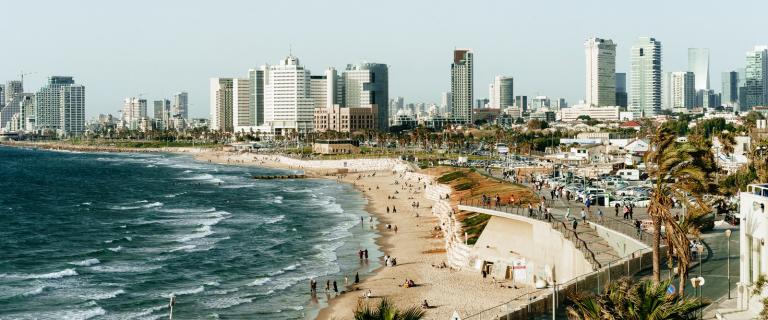
Israel: A Glimpse into the Future
While discussions of global water issues typically focus on the problems, it’s also helpful to consider the success stories. One of those is the tiny state of Israel.
After World War I, the territory of Palestine came under the control of the United Kingdom. As the British government was considering what to do with this important strip of land, its economists concluded that the area’s water resources could only support about 2 million people.[10] There were slightly more than 800,000 residents there at the time. But after the modern state of Israel was created in 1948, that number nearly doubled in just three years—and kept climbing.[11] Today, Israel is home to more than 8 million people,[12] with another 2.8 million in the West Bank[13] and 1.8 million in the Gaza Strip.[14]
Clearly, a drastic program was needed to meet the water demands of this booming population. Through the efforts of visionaries such as water engineer Simcha Blass, Israel not only met this challenge but became an exporter of water technology, water-intensive crops—and water itself. The story of that success can serve as a model and inspiration for other countries.
"Israel points the way to a future free from water insecurity."

Blass also envisioned pipelines that would stretch from the water-rich north of Israel to the south where water was most needed. Through years of effort, his visions became reality.
Israel’s visionaries then turned their sights to the world’s most abundant water source—the oceans. The idea of processing seawater for drinking and agriculture has long been an elusive dream for people around the world. Israeli scientists experimented with several desalination techniques, most of which proved too costly to be practical. But with perseverance, Israel developed a system which, though still expensive, provides an important supplement to its other water sources. Israel now has several functioning desalination plants on its Mediterranean coast, which provide an astonishing 27 percent of the country’s water.[15] Most importantly, the desalination plants serve as a kind of insurance policy against severe droughts and other disruptions. The ocean, after all, is always there.
Reclaimed waste water is another promising source of water for agriculture that Israel has used effectively. The idea of reusing sewage is repulsive to most people, but when water is at a premium, as in Israel, it’s an option that can’t be ignored. The main concern with recycled waste water is that dangerous microbes or other contaminants might remain even after processing. That could endanger anyone exposed to it, as well as the crops treated with it and the groundwater under the crops. Israel addressed this risk with a process that resembles a giant version of the BioSand water filters described earlier.

Israel’s sewage treatment plants were located near some sand dunes, under which there was a known water aquifer. The water engineers began speculating: What if the treated waste water were released into the sand and allowed to percolate down into the groundwater? Would the sand act as an effective filter? It was a risky experiment, but worth trying. After more than a year, the results were in. Yes, the sand made the water clean, safe enough for agricultural use. Today, Israel reuses more than 85 percent of its sewage, which provides 21 percent of its water.[16]
Israel also pioneered the use of drip irrigation, which made it possible to grow abundant crops by using limited water supplies efficiently.
These innovations may seem out of reach for many developing countries. Their implementation would require concerted, long-term effort, and they can be expensive. But they show what is possible. These are things we know can be done—because they have been done. They point the way to a future free from pure water insecurity. And that’s something all people can aspire to.
Click here, to read more about this article.
Click here, to read more blogs on Patheos from Gospel for Asia.


Comments
Post a Comment