7 Reasons Unsponsored Children Need Our Help
“The poor do not need our compassion or our pity, they need our help.” — Mother Theresa
It is almost impossible for us to understand the magnitude of the needs of the children of South Asia and their families needing the assistance and intervention of Gospel for Asia (GFA) and others. How bad can their life be?
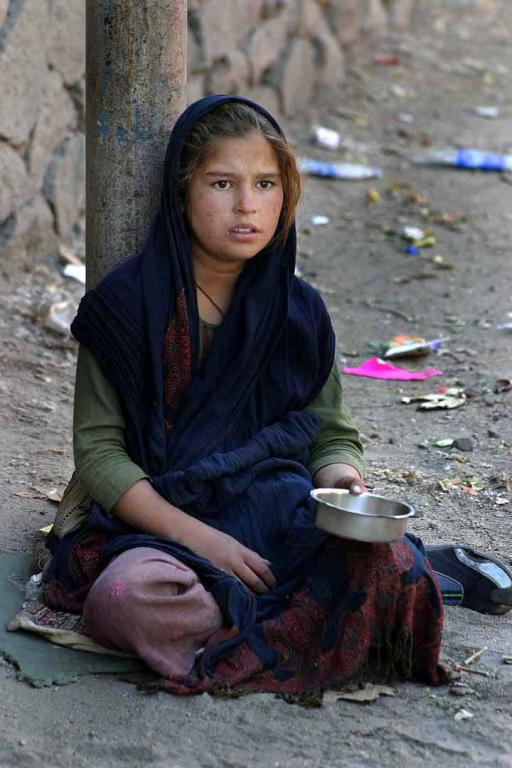
Oh, you’ve heard the appeals over and over again from Gospel for Asia (GFA), Save the Children, Compassion International, World Vision, and a seemingly endless number of NGOs who are committed to reaching out to those living in extreme poverty who are considered the lowest of the low in their home countries.
But there are literally millions of precious, innocent children suffering indignities at levels we fail to comprehend. So, let us explain a few reasons these children need our help.
1. They are considered outcasts.
Our national missionaries go into the urban slums and remote villages where the most impoverished people live. The cultural climate in South Asia has regarded these people as outcasts for centuries. Those living in abject poverty were the lowest of the low in the old caste system. Hence, we get the term “outcasts.” They were considered outcasts (outside of the castes).[1]
2. They are counted as having no value.
In any society, outcasts are regarded as having no merit. Therefore, they have no value. Anything that has no value is considered worthless. Things that are worthless are either discarded or disregarded.
3. They must scavenge to survive.
Because their parents are assigned the most menial tasks in agriculture, commerce, and industry, they (the parents) often do not earn enough wages to afford to feed their families. Children like the one in the image at the beginning of this article are often consigned to begging or scavenging just to stay alive.
4. They are made to do the most menial and repulsive tasks.
“The poorest of the poor perform the jobs that no one else wants to do. Some of the more gruesome of these include removing bits of dead carcasses from roads, and where possible, preparing and tanning animal hides to make leather goods. More disturbingly, they are the people who clear both private and public latrines, often by hand and many . . . have died in the sewers from the highly toxic fumes caused by raw sewage.”
That even includes young children.
One seven-year-old boy shared this story:
“I collect the excrement lying near the school. The excrement of dogs and cats are collected by impoverished children and thrown away. There is no toilet in the school so the human excrement lying outside the school compound is cleaned by underprivileged children. Women sit outside the school for defecation in the evening which the teachers of the school ask the children to clean.”
An 11-year-old girl shared,
“I daily do clean and sweep at a . . . house in my village. I am not paid, but to survive I have to do this. In return, I am given leftover food. I go myself to get leftover food because after the death of my father my mother has become mentally unstable. In case a dog or cat dies in my village then if I am called, I go to drag the dead animals and for that, I am paid 5 to 10 rupees. In case I do not have any work, I go for rag picking and from that money I buy vegetables.”
5. Their survival is existentially more important than their education.
Aside from the intense discrimination they endure in primary schools – which causes many to decide to drop out – if they do not eat, they will not live. So, they do what they must to survive.
6. Surviving until tomorrow means another day of the same despair.
Without outside help, unsponsored children will continue to live in these unimaginable conditions.
7. Your financial support can change their lives.
Sponsoring a child through Gospel for Asia will ensure that the child is both educated and fed. In addition, they are given regular health checkups by qualified medical staff.
Your support of poverty-stricken children is enough to radically change their lives from a foreboding destiny to a future of hope. Supported children are enrolled in Bridge of Hope centers where they learn to read and write, do mathematics, and understand the doors of opportunity that these skills can open for them.
Click here, to read more about this article.
Click here, to read more blogs on Patheos from Gospel for Asia.


Comments
Post a Comment