Seeking Justice & Defending Human Rights (Part 1 by Gospel for Asia)
Wills Point, Texas – GFA Special Report (Gospel for Asia) – Discussing the extreme poverty that globally creates modern-day slaves, affecting millions of women, men and even children.
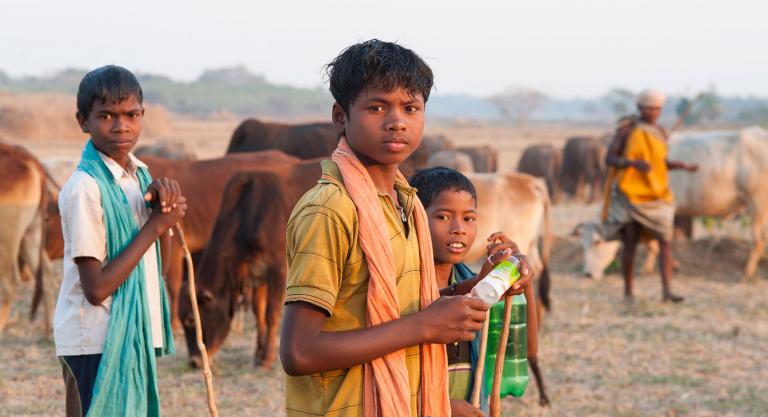
More than 80 years after George Orwell wrote in his classic Animal Farm that “all animals are equal, but some are more equal than others,” his barbed observation on disparity rings ever truer for humankind.
According to a 2017 report by Credit Suisse Research Institute, 10 percent of the world’s richest population owns 88 percent of all global wealth, while “3.5 billion individuals—70% of all adults in the world—have wealth below USD 10,000.” That includes some who could be living in grinding poverty in Asia.
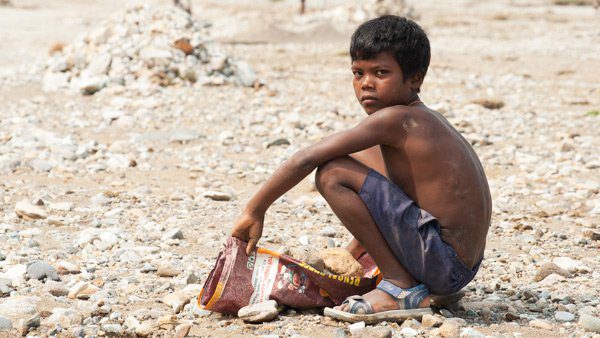
Globally, 1 in 10 is below the poverty line, somehow surviving on less than $1.90 a day.
If such staggering inequality doesn’t provoke the rich to concern for reasons of the heart, it should at least cause them to reflect on the ongoing health of their wallets. The World Economic Forum sees the rising gap between the haves and the have-nots, and the social polarization it breeds, as a major threat to world financial stability.
Such kinds of situations—the more extreme of a continuum of injustices—continue across Asia and other parts of the world because of a complex web of factors: social prejudice, gender discrimination, lack of education, and more.
Not surprisingly, then, fair employment and rights at work are among the core emphases of the United Nations’ annual World Day of Social Justice, celebrated on Feb. 20.
Poverty is not just a divide between the West and the rest, however. The gap between the rich and the poor may be as wide as an ocean or as narrow as a billboard.
“Globally, one in 10 is below the poverty line, somehow surviving on less than $1.90 a day”
With booming technology and industry sectors, India’s economy is presently the sixth largest in the world and has created more than 100 billionaires. Its financial strength is much of the reason for the World Bank tracking South Asia as the world’s fastest-growing region.
Yet, “the effects of an increasingly sophisticated and prosperous India have not reached its poorest and least educated citizens,” concludes Devin Finn in an article for the University of Denver’s Human Rights and Contemporary Slavery digest on bonded labor.
Across South Asia, “Hundreds of millions more live slightly above the poverty line, more than 200 million live in slums, and about 500 million go without electricity,” notes the World Bank. Though the number of people in the region living in “extreme poverty” has been slashed in the past decade, around 62 million children still must work to help support their families.
Worldwide, there are around 168 million of such child laborers, according to the International Labor Organization (ILO), half of them engaged in hazardous work “which endangers their health, safety and moral development.”
Click here, to read more about this article.
Click here, to read more blogs on Patheos from Gospel for Asia.


Comments
Post a Comment