Saving Lives at Risk from Open Defecation (Part 1)
Wills Point, Texas – Gospel for Asia Special Report (GFA) – Discussing the troubling problem of open defecation and the lack of basic sanitation facilities for millions throughout the world.
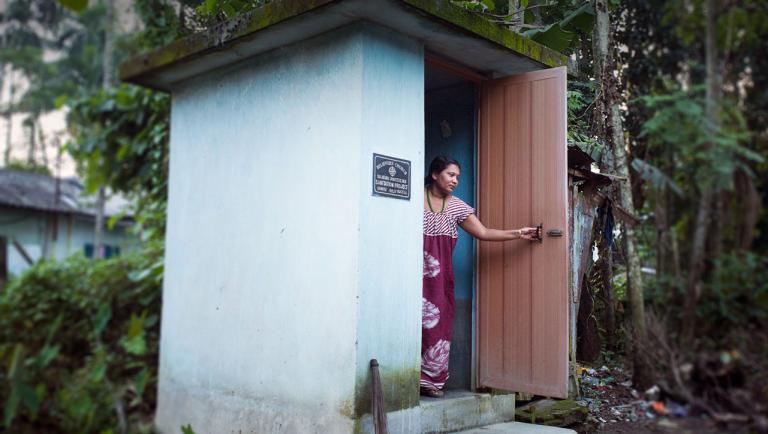 |
| 2.3 billion worldwide lack basic sanitation facilities and 892 million still defecate in the open, according to World Health Organization. |

The first trip I made around the world was at the invitation of Food for the Hungry, and I traveled with Larry Ward, the executive director at the time, and his wife, Lorraine. It was on this trip I became convinced this particular crew of crisis-ready, crisis-solving, crisis-adaptive humans was fueled solely by adrenaline (“When does he sleep?”).
The purpose of the trip was an international field survey with an emphasis on the refugee crisis in the world, which at that time in the 1980’s was the largest since World War II. We started in Hong Kong and ended seven weeks later in Kenya, Africa. My assignment was to observe with fresh eyes and to write about what I had seen.
The book I wrote, The Fragile Curtain, with the help of daily briefings from the U.S. State Department and the excellent international reporting of “The Christian Science Monitor” (as well as some generous coaching from a Pulitzer Prize-winning newspaper reporter) won a Christopher Award, a national prize for works that represent “the highest values of the human spirit.”
Eventually, I brought the accumulated exposure of my world travels—some 55 countries in all—and the learning I had gathered through journalism research and the actualities of dragging through camps and slums to the board table of Medical Ambassadors International (MAI), a global faith-based health organization.
The former international field director of MAI, now working to create a coalition of some 250 mission groups and development organizations implementing the MAI teaching methodology, made a statement I thought about for years:
“I never realized,” he said, “that I would eventually measure the impact of the Gospel by how many toilets had been built in a village.”
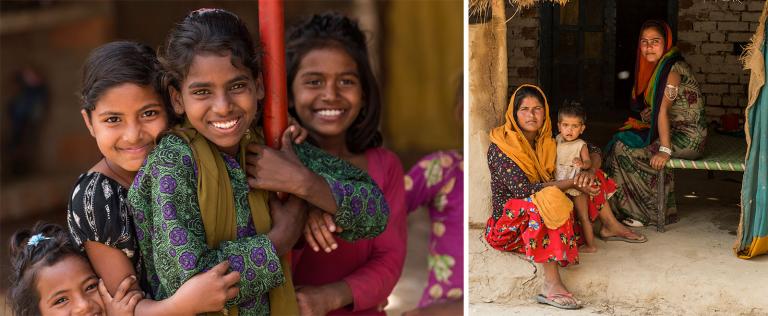 |
| Women and girls are often at risk when open defecation is the only option for relieving themselves. Thankfully, these precious faces can smile because a toilet facility was recently built in their village. |
GFA’s Story: Fighting Open Defecation, Helping to Improve Sanitation in Asia
So what does Christianity have to do with the defecation problems of the world?
Gospel for Asia (GFA) is an organization close to the heart of my husband, David Mains, and to myself. We met K.P. Yohannan, GFA’s founder, when it was just an impelling vision in the heart of a young Indian man—one of those divine nudges that simply would not stop pushing at him. Since then, David has traveled to Asia at the invitation of Gospel for Asia (GFA) some eight times; I have visited Asia under their auspices once. We’ve watched as K.P.’s vision grew from a dream to an actuality with numbers beyond anything we could have considered possible.
GFA’s website tells its story, and its story is vast:
- In 2016, some 82,000 impoverished children were fed, clothed and schooled;
- 829 medical camps provided hundreds of people with free medical care and advice;
- 10,512 latrines with dual-tank sanitation systems were constructed.
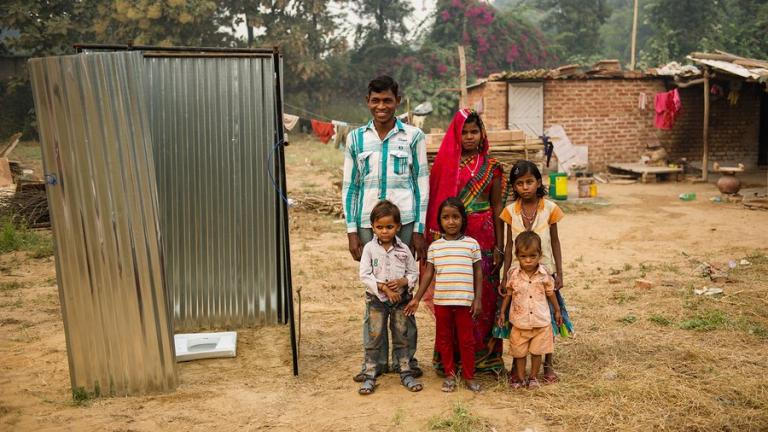 |
| This family stands in front of a latrine or “squatty potty” that was installed by GFA-supported national workers. |
Gospel for Asia (GFA) started building latrines in 2012, setting a goal of constructing some 15,000 concrete outhouses by 2016. Potable water, of course, travels hand in hand with sanitation, and in 2016, the ministry’s field partners constructed more than 6,822 “Jesus Wells” and distributed 14,886 BioSand water filters to purify drinking water. Touching vignettes on GFA’s website make the statistics personal.
“This saved the lives of people from illness,” stated one villager—and indeed, toilets, when and if they are used, do just that.
A village elder expressed thanks:
“The church is always concerned about the need of people and works hard for a brilliant life for the community.”
There, indeed, is a thread that runs through Gospel for Asia’s stories of toilets: The pastor of the church in this village or that hamlet seems to be the catalyst for health improvement.
Click here, to read more about this article.
Click here, to read more blogs on Patheos from Gospel for Asia.


Comments
Post a Comment