Gospel for Asia Introduces the Global Clean Water Crisis
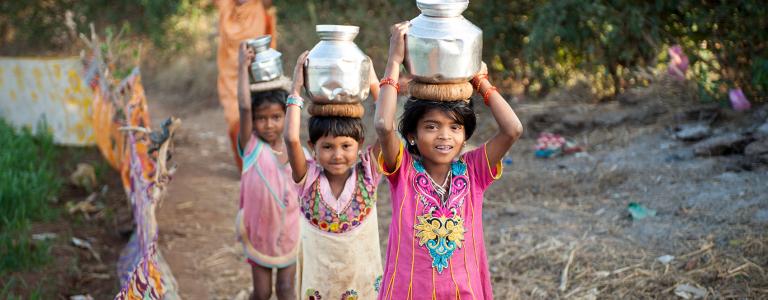 |
| Asian girls carry clean drinking water for miles because of the global clean water crisis. |
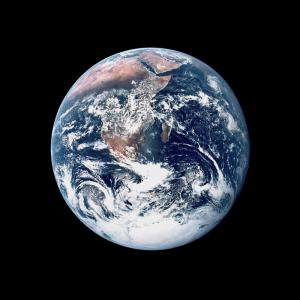
The “Blue Marble” photo of Earth shot from Apollo 17, the last of NASA’s Apollo missions as the rocket ship was hurtling toward the moon, wasn’t the first satellite image of our planet, but it was the first full image—stunning in color—taken from some 18,000 miles in space, with the sun fully illuminating Earth. The south polar ice cap, despite heavy cloud cover, was clearly captured, and the photo showed almost the entire coastline of Africa, extending from Antarctica to the Mediterranean Sea. Most of us who saw it at that time were stunned with how much water covered our planet.
This one single dramatic image eventually gave the name “Blue Planet” to our Earth, due obviously to the abundant water sources we could see on its surface. The photo was taken on December 17, 1972 and for all of us at that time, caught up in the exploits of the space discovery, it forever altered the comprehension of our planet. Now, when I think of Earth, and when hundreds of millions of others think of Earth, this is the iconic image that comes to mind.
This is an article about the global clean water crisis, about clean water, about water from a tap or from a glass, hopefully free of pathogens that bring disease. This is an article about clay pots and large plantain leaves and cupped dried gourds that hold rainfall hopefully untainted by acid effluvium. This is an article about pole wells drilled beneath polluted soil, and the unintended arsenic poisoning of villagers. This is an article about drying water reservoirs, about waste and sewage and chemicals polluting streams and rivers and major waterways. It is about encroaching urban development laying acres of implacable concrete and miles of roadways over land where rains can now no longer replenish water tables. It is an article about taking responsibility for that Blue Planet spinning alone, and as far as science now knows, unparalleled in our universe. No liquid water has been confirmed as existing on any other planet in our solar system. As yet, not a single drop of water has been detected anywhere in interstellar space. Scientists have determined that only a planet of the right mass, the right chemical composition and the right location can support liquid water; in other words, a planet like ours, the Blue Planet, this Earth.
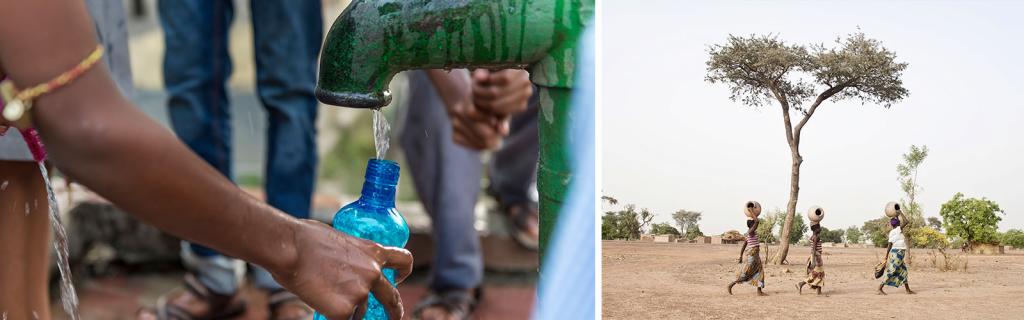 |
| 663 million people around the world do not have access to safe drinking water as of 2015. This is the first time the number has fallen below 700 million. |
That information alone should evoke awe when we look again at the ubiquitous reproductions of the Apollo 17 photo (identified by NASA as AS17-148-22727.) This image is perhaps best described in the spare language of Genesis 1. “In the beginning God created the heavens and the earth. The earth was without form and void, and darkness was upon the face of the deep; and the Spirit of God was moving over the waters … And God said, ‘Let there be a firmament in the midst of the waters, and let it separate the waters from the waters.’ And God made the firmament and separated the waters which were under the firmament from the waters which were above the firmament. And it was so.” The Creation account then proceeds with the regular, rhythmical and dynamic pronouncement of the Creator, “And it is good. And it is very good.”
Just imagine: God looking at the actuality of what that splendid photo AS17-148-22727 replicates. Who can refuse to admit to experiencing a similar and deep soul sigh, it is good. It is very good . . .? According to United States Geological Survey (USGS), “The Earth is a watery place. But just how much water exists on, in, and above our planet? About 71 percent of the Earth’s surface is water-covered, and the oceans hold about 96.5 percent of all Earth’s water. Water also exists in the air as water vapor, in rivers and lakes, in icecaps and glaciers, in the ground as soil moisture and in aquifers, and even in you and your dog.”
I’m not sure about water content in the animal species, but data informs me that adult males are about 60 percent water and adult females are about 55 percent water.
Samuel Taylor Coleridge’s poem “The Rime of the Ancient Mariner” captures the analysis of contemporary oceanographers, “Water, water everywhere.” And unfortunately, due to the stresses of climate change, rising seas, urban sprawl, lack of urban planning, spoiled springs and creeks and raging rivers overwhelming their banks and flooding, the rest of that poetic lament is becoming all too real, “And not a drop to drink.”
Click here, to read more about this article.
Click here, to read more blogs on Patheos from Gospel for Asia.


Comments
Post a Comment