Come Unto Me All Ye Who Labor and Are Heavy Laden
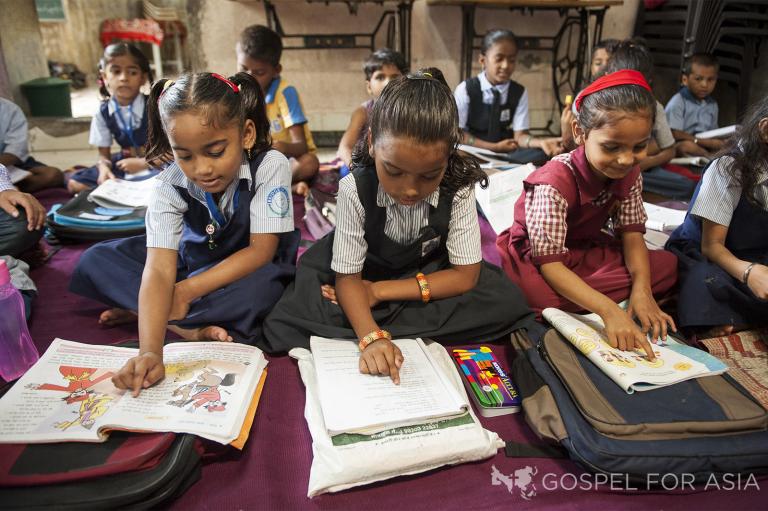 |
| Bridge of Hope students |
“The test of our progress is not whether we add more to the abundance of those who have much; it is whether we provide enough for those who have too little.” —Franklin D. Roosevelt
Imagine 168 million children. That’s a very difficult thing to do. In perspective, 168 million is about one-half the entire population of the United States.
What’s the point?
More than 168 million children worldwide are deprived of the education they need to succeed because they live in abject poverty and are forced to work to survive. Some turn to begging. Others search garbage dumps for food, shelter or clothing. These underprivileged children are extremely vulnerable to sickness, disease, death or the bondage and exploitation of human trafficking.
Poverty is widely considered as the top reason why children work at inappropriate jobs for their ages. Children work because their parents are poor, and they must supplement the family income or provide unpaid labor until debts are worked off.
Some 62 million children between the ages of 5 and 17 work as child laborers in Asia and the Pacific. More than a third are involved in jobs that are considered hazardous work for anyone of any age, including working in brick kilns, rice mills, mines, firework and match factories, and tanneries. Or worse.
UNICEF has recognized that “combating child labor requires long-term coordinated action which involves many stakeholders and the government. This includes educational institutions, mass media, NGOs and community-based organizations as well as trade unions and employers. It is important that the attitudes and mindsets of people are changed to instead employ adults and allow all children to go to school and have the chance to learn, play and socialize as they should.”
Furthermore, “Education is a key to preventing child labor and has been one of the most successful methods to reduce child laborers … This includes expanding education access to schooling, improving the quality and relevance of education, addressing violence in schools, providing relevant vocational training and using existing systems to ensure child laborers return to school.”
What’s to be done?
One of the primary reasons that poverty keeps underprivileged children from school in developing countries is that parents often must pay for their children’s education. When a family’s need for food, shelter and clothing are not being met, paying for education takes a back seat on a very long bus of needs.
Part of the secret to helping, in South Asia and any other part of the world, can be realized in the quote from Franklin D. Roosevelt, the 32nd President of the United States:
“The test of our progress is not whether we add more to the abundance of those who have much; it is whether we provide enough for those who have too little.”
Pointing our collective forefingers at the governments of emerging nations where child labor is still prevalent may provide us with a pontifical sense of self-righteousness, but it does nothing to address the problem other than to project the entire blame on the government. The problem is that there is no singular solution. The problem is too broad and too complex for any singular effort to entirely resolve.
Click here, to read more about this article.
Click here, to read more blogs on Patheos from Gospel for Asia.


Comments
Post a Comment