Water Well Donation: Africa, a Land of Water Scarcity
If you’re considering a water well donation, Africa is in critical need of clean water. Water is essential to life, yet 1 in 3 Africans suffers from water scarcity.1 Of the millions of people worldwide who are dependent on unprotected, unsafe water sources, nearly half live in sub-Saharan Africa.2 Without access to reliable, clean water, the people in this region face a myriad of challenges.
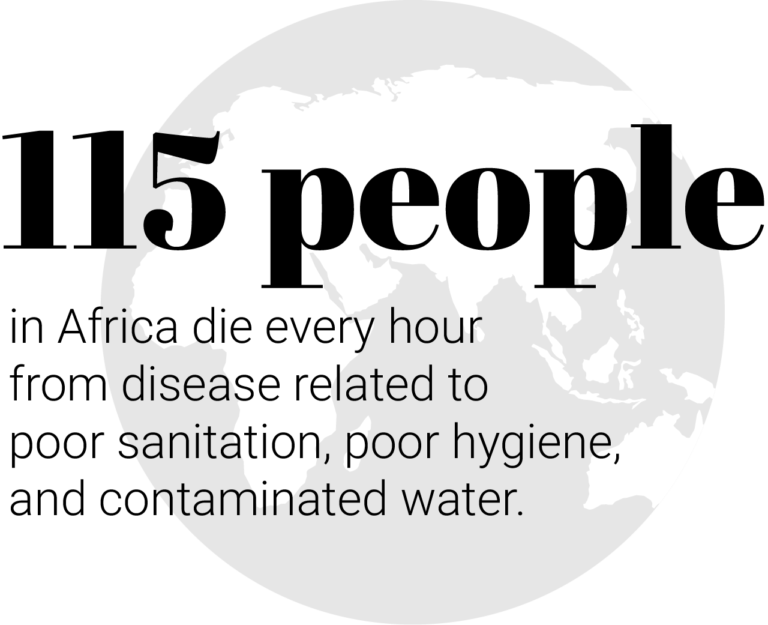
Children are particularly vulnerable to waterborne diseases. Their small, growing bodies have higher metabolisms and contain proportionately more water than adults.5 Diarrhea, which depletes the body’s fluids, claims the lives of approximately 1.5 million children every year in developing areas such as Africa and South Asia.6
In areas dependent on agriculture, water scarcity also affects one’s livelihood. This is true for 90 percent of the rural population in sub-Saharan Africa, whose primary income commonly relies on rainfall that may or may not come.7 This unpredictable livelihood likely contributes to the fact that 413 million people in Africa live in poverty as water scarcity and other issues inhibit the region’s development.8
There is also the burden of collection. The majority of people in sub-Saharan Africa, approximately two-thirds, are almost completely dependent on surface water from sources such as rivers, lakes or even dirty ponds.9 Even though this water is often contaminated, it’s the only water many people can access. Not only is it dirty, it’s distant. Many people walk 30 minutes or more to haul the family’s daily water needs.10 This burden typically falls to women and girls.
The lack of clean water steals time, health and income. It hinders people’s survival and any attempts to escape poverty.
Click here, to read more about this article.
Click here, to read more blogs in Gospel for Asia.Com


Comments
Post a Comment