What Is Water Scarcity? Understanding the World’s Limitations and Humanity’s Needs.
In May of 2022, the state of California’s Water Board issued an emergency water conservation regulation “that bans using potable (drinkable) water on decorative or non-functional grass at commercial, industrial, and institutional properties – including areas of nonfunctional turf under homeowners’ association control.”[1]
The answer to a question like what is water scarcity looks different for a homeowner in California than a family in sub-Saharan Africa. As United Nations Water points out, physical water scarcity is relative, reporting that, “The amount of water that can be physically accessed varies as supply and demand changes. Water scarcity intensifies as demand increases and/or as water supply is affected by decreasing quantity or quality.”[2]
So, what is water scarcity and how can it be addressed? It is the reality of the available water not being able to meet the needs of the population. California is famous for having water shortages and restrictions. The state has reached new levels of scarcity that result in the regulation listed above. However, scarcity for those near or under poverty’s grip, such as those in developing countries, its the lack of useable water for drinking, cooking, cleaning and bathing.
Water scarcity facts tell us that 2.3 billion people live in water-stressed countries, of which 733 million live in high and critically water-stressed countries.[3] These situations are a far cry from not being able to water your lawn. These are people who have to daily walk miles for water or who are using contaminated water sources that can lead to disease.
UN Water says that integrated water resources management, a broad framework for governments and territories to care of their water resources, includes “exploring, protecting and sustainably using groundwater will be central to surviving and adapting to…meeting the needs of a growing population.”[4]
What is water scarcity’s solution? GFA World is committed to this affordable, sustainable solution for countries with water scarcity through our Jesus Wells. These wells are drilled as deep as needed to provide water year-round in areas that lack the infrastructure for domestic drinking water through pipes into homes. This kind of groundwater can be accessed by those in rural, poverty-stricken areas, even areas where it seems impossible to find water beneath the surface.
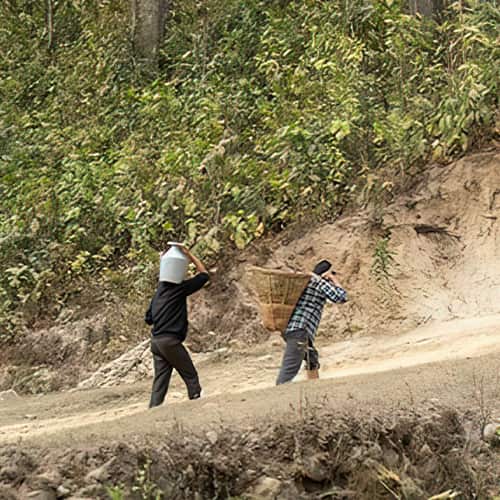
After he received permission to drill and funds were provided for the Jesus Well, he and his faithful group of church volunteers encountered problem after problem, from the terrain to the doubts of the villagers watching them struggle against the landscape.
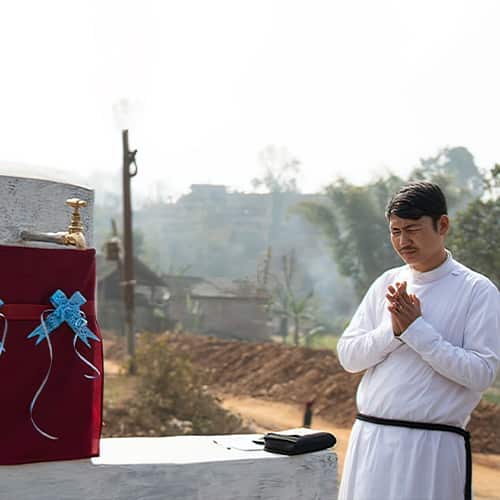
Little by little with prayer and perseverance, the drill continued into the mountain until it hit a pocket of water, enough for the whole village.
“It is a great joy for us to see that the Jesus Well is just in front of our house,” says Harleigh, a resident of the village and elder of the church. “Gone are those days that we had to walk for several hours to fetch water.”
Click here, to read more about this article.
Click here, to read more blogs in Gospel for Asia.Net


Comments
Post a Comment