Clean Water Initiative
GFA World’s efforts among people in need include a clean water initiative. Simple access to clean water can save millions of people’s lives.
While clean water Christian organizations such as GFA World, and organizations like the United Nations and UNICEF, have made substantial progress in providing greater access to clean water and sanitation, billions of people still lack basic services: One in three people don’t have access to safe water to drink, while 40 percent of people don’t have a place to wash their hands with soap and water.[1]
Despite progress, even the WHO and UNICEF are struggling to keep up with demand for clean water and sanitation. “The alarming and growing needs continue to outstrip our ability to respond,” said UNICEF Executive Director Henrietta Fore. “The time has come to dramatically accelerate our efforts to provide every child and family with the most basic needs for their health and wellbeing, including fighting off infectious diseases like COVID-19.”[2]
It’s hard to imagine, but one in four medical care facilities throughout the world lack basic water supplies, and 20 percent of them don’t have sanitation services. Furthermore, 40 percent of medical facilities don’t have soap and water or alcohol-based hand rub where they provide care.[3]
We all know clean water initiatives are essential for people’s health and children’s development, but we often don’t consider how water reduces poverty, increases peace and promotes education and productive societies.
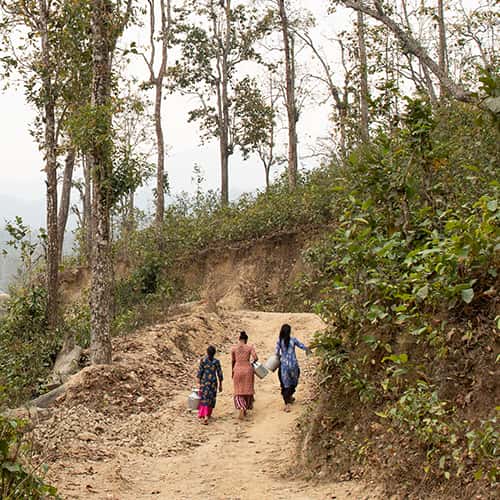
At some water sources, certain groups may experience discrimination and be condemned by unfriendly neighbors. On a larger scale, fights over water “are leaving countries further downstream increasingly thirsty, increasing the risk of conflicts,” according to BBC Future.[4]
Water Reduces Poverty
It’s almost impossible for families to climb out of poverty when women and children spend much of their valuable time walking far distances to collect water when women could be earning income and children could be attending school. To make matters worse, these families often suffer from diarrhea, intestinal worms and other crippling diseases that stunt their physical and cognitive abilities because the water they work so hard to collect is contaminated. Around the world, children lose collectively about 443 million school days due to water-related illnesses.[5]

Worldwide, inadequate water has been associated with $260 billion worth of economic losses, including health care, annually. However, every $1 invested in improved sanitation results in an average global economic return of $5.50, according to WHO.[6]
According to the United Nations, “By managing our water sustainability, we are also able to better manage our production of food and energy and contribute to decent work and economic growth.”[7]
Click here, to read more about this article.
Click here, to read more blogs in Gospel for Asia.Com


Comments
Post a Comment