What Are Some Important Disaster Relief Donations?
When an emergency strikes, disaster relief donations are crucial for meeting the needs of the people who are impacted. These gifts can bring help to affected communities during emergency relief and the days that follow. According to American Red Cross data, relief organizations respond to approximately 65,000 disasters each year in the United States alone. This scale of emergency responses demands consistent support from donors. Coordination across local, state, and federal levels becomes essential during major crises. Relief is essential whether it’s a weather-related disaster, a destructive fire, or a wartime event. Disaster relief organizations use these donations from generous people to meet crucial needs in affected areas. Effective emergency management requires coordination between multiple agencies and depends heavily on available resources.[1]
Here are some key donations that are helpful in relief situations:
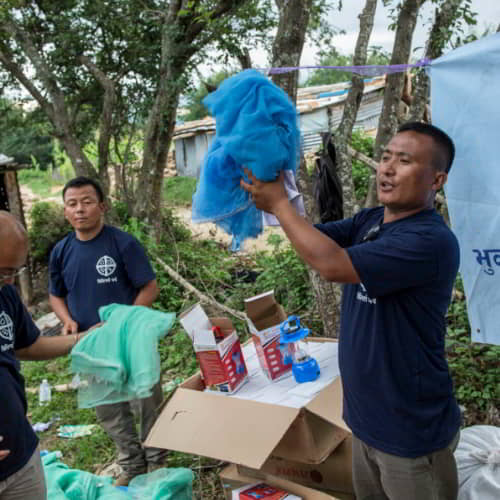
Preparation Donations – When donors give to relief organizations during calm times, those ministries can be ready when disaster strikes. Proactive giving strengthens disaster preparedness programs significantly. Research shows that organizations with pre-positioned resources can begin recovery efforts up to 50% faster than those relying solely on post-disaster funding.[3] These recovery efforts include rebuilding homes, replacing tools, and helping communities regain stability after crisis events pass. Organizations appreciate proactive giving because they can act more quickly when money is already waiting. This kind of steady giving supports relief and recovery, including long term recovery, after the first headlines fade.[4]
Volunteer Yourself – Volunteers are an important part of disaster relief. Some sit next to survivors and offer compassion. Others help fix the infrastructure of a village. Specialized volunteers may provide case management services to help families navigate complex recovery processes. Disaster case management connects survivors with trained advocates who develop personalized recovery plans addressing financial, emotional, and practical needs.[5] Special skills like construction skills, medical knowledge or electrical experience are sometimes necessary. If you can’t travel, you can still support disaster response. You can do that by encouraging safe, coordinated giving and volunteering through trusted groups.[6]
Can disaster relief donations be tax deductible? In the United States, charitable gifts may be tax deductible if you donate to a qualified organization and meet the IRS rules for claiming a deduction. Keep your donation receipt. You may also want to talk with a tax professional about your situation[7] Most established disaster relief organizations maintain 501(c)(3) tax-exempt status, allowing donors to claim deductions when itemizing on federal tax returns.[8]
Click here, to read more about this article.
Click here, to read more blogs in Gospel for Asia.Org


Comments
Post a Comment