Unveiling the Challenges Faced by South Asia’s Impoverished Communities: Classification Perspective
Before delving into the realities of life in impoverished communities, it is crucial to recognize their diversity. Poverty-stricken areas exhibit varied characteristics across continents, countries, and cities. In South Asia, various impoverished communities classifications have been established to identify and categorize, offering valuable insights into the specific challenges they face: notified, recognized, or identified.[1]

In South Asia, impoverished communities are classified as notified or non-notified. Notified communities have some access to city services, including clean water supply. Non-notified slum-like communities lack property rights and direct access to essential services such as electricity, sanitation, garbage collection, and public transportation. Shockingly, half of the slums in major cities fall into the non-notified category, exacerbating the challenges faced by residents.

Recognized slum-like communities in South Asia are documented by housing or urban development boards but not officially “notified” as impoverished communities by the government. Despite recognition, these communities still struggle with inadequate infrastructure, lack of proper sanitary facilities, and limited access to clean drinking water. Acknowledgment falls short of providing comprehensive support to uplift the residents.
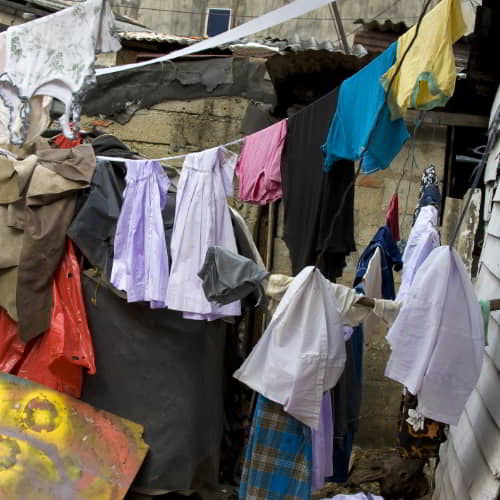
Identified slum areas in South Asia, characterized by high levels of poverty and deprivation, exist in various parts of the region. These communities lack basic amenities and face challenging living conditions. Residents endure an unhygienic environment with inadequate infrastructure, improper sanitation facilities, and limited access to clean drinking water. The government does not officially recognize these identified slums, further complicating efforts to address their plight effectively.[2]
A slum in South Asia exemplifies the complexities within impoverished areas. While many residents have low-paying jobs within the slum, their tenement conditions remain among the most challenging. Limited access to working toilets forces slum residents to find alternative solutions, straining nearby resources. Waterborne diseases like cholera, dysentery, and tuberculosis pose constant threats to residents’ health. Moreover, the geographical vulnerability of this South Asian slum exposes it to monsoon rains, cyclones, and flooding.[3]
Click here, to read more about this article.
Click here, to read more blogs in Gospel for Asia.Net


Comments
Post a Comment