The Harsh Cycle of Life in the Impoverished Communities of South Asia
Life in the slums and impoverished communities in South Asia is a challenging and generational cycle. Alcoholic husbands often provide families with limited financial resources and little guidance. Uneducated wives resort to daily labor jobs in an attempt to make ends meet. Children, as young as second grade, drop out of school to contribute to the family income. In some cases, children never have the opportunity to attend school due to their families’ inability to afford basic necessities like water, electricity, and education.

Slums are characterized by littered streets, where garbage is a common sight. Lack of access to clean drinking water and inadequate hygiene practices, such as hand-washing, contribute to high disease rates among slum residents. The absence of proper sanitation facilities further compounds these health challenges. Moreover, slums become breeding grounds for crimes like prostitution and sex trafficking, entrapping numerous individuals without any means of escape.[1]
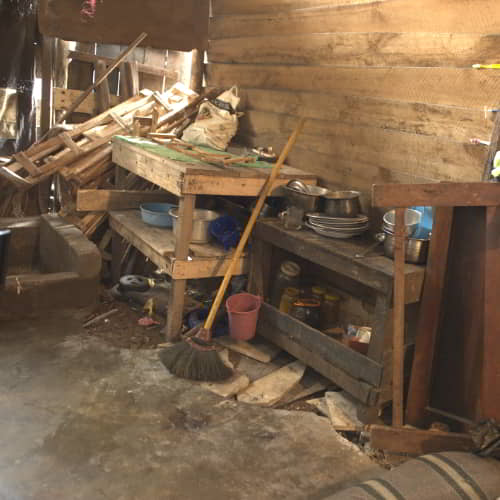
A study conducted by Anirudh Krishna, M. S. Sriram, and Purnima Prakash in South Asia examined the living conditions, livelihood strategies, and future prospects within different types of slums.[2] The study concluded that vast differences exist between slums of varying types, which are not adequately captured by the standard classifications of notified, recognized, and identified slums. In fact, the authors argue that the disparities within and between the first two types are far more significant than officially recognized. They further highlight that identified slums encompass the poorest of the poor, receiving minimal attention, time, or services.
The authors refer to the term “first-generation” to describe slums with temporary structures and residents’ initial intentions to settle temporarily. Many residents migrate from impoverished rural villages, aiming to earn income to repay debts in their hometowns. Some individuals shuttle back and forth between villages and slums periodically to fulfill these financial obligations. Others are squatters, while some pay monthly rents ranging from 200 to 400 rupees to reside in 7 x 7 tents on private property.
Click here, to read more about this article.
Click here, to read more blogs in Gospel for Asia.Net


Comments
Post a Comment