Global Poverty: There Is Hope
In the face of the staggering statistics on global poverty, it would be easy to become discouraged that no amount of work and good will could make a difference. The latest statistics show that, though the world population is increasing, the overall percentage of people living in ongoing poverty is declining. In 2017, the global poverty rate was 9.1%. One year later, it was down to 8.6%, an equivalent of 28 million people.[1]
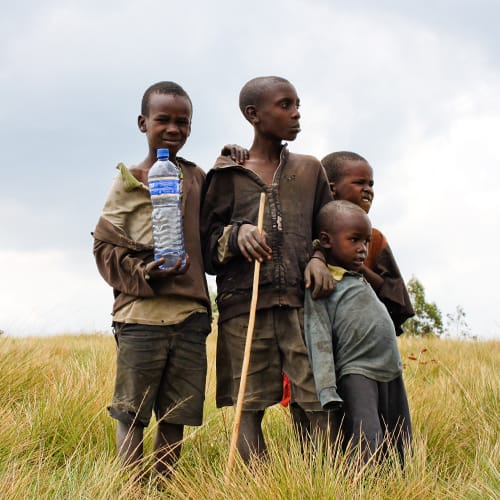
In 2015, the 15 member states of the United Nations issued 17 Sustainable Development Goals that they felt were essential to both developed and developing countries as a way forward for everyone to experience peace and prosperity. Global poverty is number 1 on its list.[3]
Both governments and non-governmental organizations (NGOs) are looking for and implementing strategies that provide individuals and families with ongoing means of income through skills, work, trade, farming, and entrepreneurship. Though issues of health and education play heavily into a person’s poverty status, there is no denying that having a regular source of income provides firm footing to walk out of poverty.
In many countries within Asia for example, poverty has had a foothold in certain regions for centuries, especially in rural areas. For example, in one country, an estimated 256 million people live on less than $1.90 per day.[4] They lack the resources and ready industries that keep people employed in more populated areas. Though many find work in fields or nearby cities, it is often not enough to pay for even the most basic of needs. This leads to making devastating decisions about education, healthcare, and more.
Click here, to read more about this article.
Click here, to read more blogs in Gospel for Asia.Net


Comments
Post a Comment